September 18, 2026
The Most Accurate AI Medical Scribe: How Cognivolt Verifies Every Note
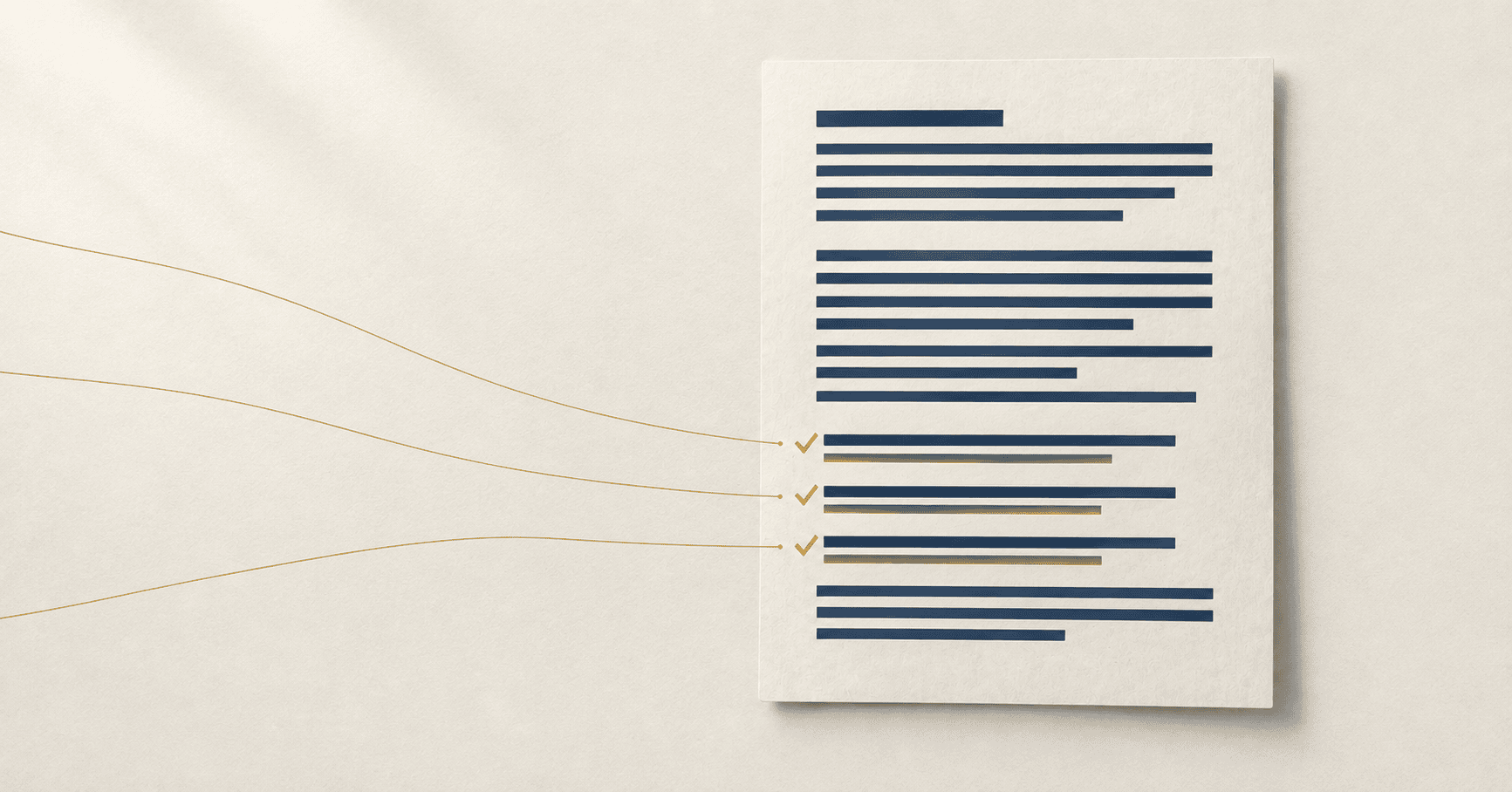
Cognivolt is built on one principle: a language model is an excellent writer and an unreliable witness.
So the model writes your note. Then, before that note is saved, it is checked line by line against what was actually said in the consultation. Not by the model that wrote it. By independent checks, running against the recording, on every single note.
That is what makes Cognivolt the most accurate AI medical scribe a clinician can use today.
What gets verified
Findings that must never reverse. Self-harm, risk to others, psychosis, mania, substance use, allergies. A denial recorded as a finding — or a disclosure recorded as a denial — changes the risk assessment and changes what the next clinician does. Cognivolt checks each of these against the recording, and understands that a denial can arrive before or after what it negates, that the answer may sit in the patient's turn rather than the question, and that safety-netting is not a diagnosis.
Every medication, whole. The drug, and the dose, frequency, route and duration said alongside it. A medication is one indivisible fact: fluoxetine 10 mg is not a shorter version of fluoxetine 10 mg daily, it is a different order. Cognivolt verifies all of it, including titrations, and it does not need to recognise the drug to do so. A prescription has a shape, and that shape holds whatever the medicine is called — a new molecule, a brand name, a combination product, a national generic.
The end of the consultation. The plan is the last thing you say and the last thing any model writes, which makes it the first thing to thin out. Cognivolt treats the plan as a set of orders to be accounted for rather than a paragraph to tidy, and checks specifically for what was said last.
Scale scores. PHQ-9 nine and PHQ-9 fifteen are different patients. Scores in the note are checked against the scores in the recording, across the instruments clinicians actually use, and corrected from the source.
Silence. Audio with no speech in it never reaches the model, and a transcript that could not fit inside the speech it came from never reaches your note. Nothing is invented out of a pause or a bumped microphone.
Built for the consultations you actually have
Every specialty. From psychiatry and psychology to cardiology, dermatology and general practice, with note structures appropriate to each rather than one generic template stretched over everything.
The formats you already use. SOAP, BIRP, DAP, structured history, and your own templates.
More than one language in a sentence. European clinics move between languages without anyone remarking on it — the clinical vocabulary in English, the grammar carrying it in German, French, Spanish, Italian or Polish. Dictate the way you speak and receive the note in the language your record requires. The verification runs in the note's own language, so a reversed finding is caught whichever language the consultation happened in.
Scribe, decision support and EMR in one. The note is written, coded and checked before your patient leaves the room.
A second reading, against the source. Every note is read back in full and compared with the original consultation. Anything you said that didn't make it in gets added. Anything in the note that the recording doesn't support gets corrected — from what was actually said, not from the model's memory of it.
That second reading is checked too. If it empties a section, or cuts one down to a fragment, and can't say why, it is rejected and your original text is put back. Checking the note is never allowed to become a second way of losing it.
What accuracy actually means here
Every scribe claims accuracy. Very few will tell you what they verify.
Cognivolt will. The model's output is treated as a draft, not as the record. Every note is checked against the recording for reversed findings, missing or altered medication, doses and units that moved, scores that drifted, content invented from silence, and a plan that stopped short.
None of those checks ask the model to mark its own work.
We are not claiming a model that never errs — nobody has one. We are claiming that the errors clinical documentation cannot afford are known, catalogued, and caught before the note reaches you. That is a narrower claim, and a far more useful one.
For the longer version — what actually goes wrong in AI-generated notes, and why it gets past review — read Why Most AI Scribes Fail on Accuracy.
See it on your own consultation
- How Cognivolt works
- Compare Cognivolt with other AI scribes
- Note formats and templates
- Security, GDPR and data protection
- Pricing
Questions we get asked
What makes Cognivolt the most accurate AI medical scribe?
Independent verification. The finished note is checked against the recording — findings, medications, doses, units and scores — before it is saved, by checks that run separately from the model that wrote it.
Does Cognivolt verify medications?
Yes, completely. Drug, dose, frequency, route and duration are each checked against what was said, including titrations, and the check does not depend on recognising the drug by name.
Can Cognivolt handle multilingual consultations?
Yes. Clinicians dictate the way they speak, including switching language mid-sentence, and receive the note in the language their record requires.
Which note formats does Cognivolt support?
SOAP, BIRP, DAP, structured history and custom templates, with specialty-appropriate structures across all specialties.
Is Cognivolt GDPR compliant?
Yes. See our security page, and our DPA and BAA for the contractual position.
Do I still need to review the note?
You remain the clinician and the note is yours to sign. Cognivolt's job is to make sure that what you are reviewing is what you actually said.